But why floods still persist when rain-fall is low ?
Land Encroachment

Source
Environmental changes in the Hindon river
Rainfall seeps into the ground and slowly recharges underground water sources, keeping groundwater alive.
When rainfall reduces or becomes irregular, groundwater levels drop and the hidden water beneath us begins to disappear.

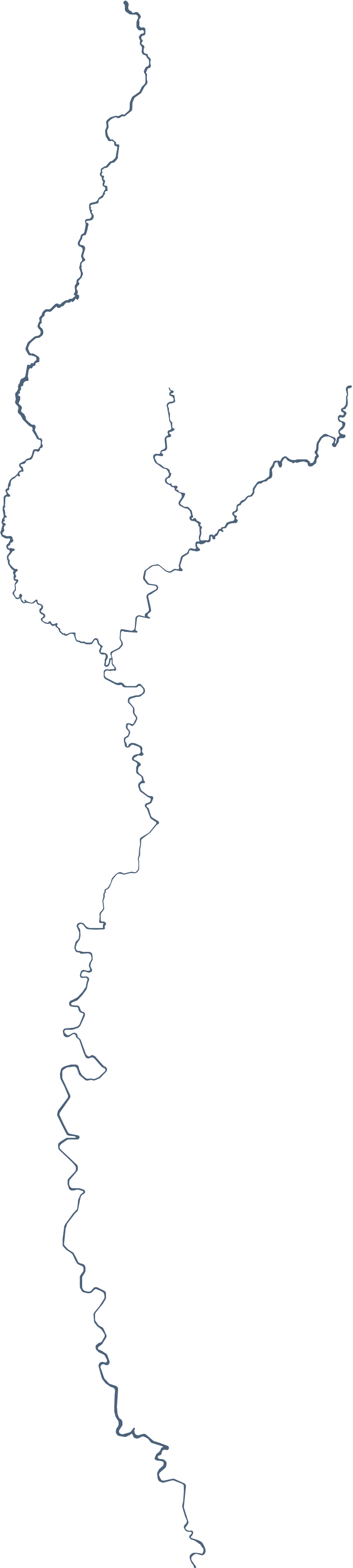
The ecology of the Hindon River is spread across 8 districts Saharanpur, Shamli, Muzaffarnagar, Meerut, Baghpat, Ghaziabad, and Gautam Buddha Nagar. Studying these regions helps in understanding the state of biodiversity impact over the last 10 years.
7% of bird species are threatened due to direct mortality from pollution, with a further 3% experiencing reduced reproductive rates.
In 2025 report 5–10% decline in five riverine bird species due to pollution, habitat destruction, and other human factors.
Maheshpur, Saharanpur Distt.
Baparsi, Baghpat Distt.
Balmiki Ashram, Baghpat Distt.
Hindon Bridge, Ghaziabad Distt.
Tilwada, Gautam Buddha Nagar
Titavi, Muzaffarnagar Distt.


Shifts in the river system are closely linked to changes in rainfall patterns and climate conditions, increasing human health hazards, and altering the lived experiences of local communities.
Ecology, Changing Environment, and Humans Hazard
Lives under threat
How this distance happened ?
The “distance” between people and a river doesn’t only mean physical space it also means emotional, ecological, and cultural separation. It happens slowly through changes in environment, ecology, and human impact that they face themselves due to river degradation.
river degradation.

"A long stretch of Uttar Pradesh's Hindon river has turned toxic due to rampant industrial pollution in the region."
"Red, Green Or Black": UP's Hindon River Turns Toxic Due To Pollution
Source : NDTV
The land which was used for everyday human activities, interactions, and community life is no longer in use .

Uttar Pradesh
Scroll Down

Scroll Down
What died with Hindon ?
Chapter 2
Reshaping the relationship between humans, environment, and ecology through patterns of exploitation.
Loss of community relationship with the river
Since last few years urban growth along the river have sharply degraded its ecology. Bird populations have declined , native flora has reduced, and aquatic as well as land fauna diversity has weakened, leaving only a few tolerant species.
This happened as a response to the destruction of clean water, food sources, and natural habitats.
When survival became impossible

Menu
0%
As with time declining in rainfall occurs it limits natural groundwater recharge, weakens the river system and drive higher irrigation needs.
Together, these interconnected factors place significant pressure on limited water resources, ultimately leading to environmental degradation.
Shifts in groundwater
pattern

The disturbed natural water balance along with the land encrochment done near river further lead to the problem of Flooding. Encroachment reduces the capacity of floodplains to store excess water,
causing it to overflow into surrounding areas.
When the environment is harmed, it strikes back through disease, polluted water, toxic air, and ecological collapse and humans are forced to face the consequences of their own destruction.
What happens to the health of the communities ?
But still Flood Issues countinue in down stream due to enchrochemnt done near river, so every time it rain flood like situation occur in monsoon
Source : ANI News
The river can still be restored through collective action, reduced pollution, wetland protection, sustainable water use, and reconnecting natural flows. Healing the river means rebuilding the balance between ecology, environment, and human life.
So, is there posiibility of change?
May be !

@Hindon River Project 2026


@MDes Dau 2026 Final Thesis Project 2026
Connect to help
Can we restore it back?
What died with Hindon ?
How did Hindon die?
Home Page
Location


Heavy metals such as lead, cadmium, and chromium accumulate in water and sediments because they do not easily break down in the environment.
High exposure to lead can severely damage the brain and central nervous system, leading to coma, convulsions, or even death, while Cadmium affects the Kidneys, Skeletal, and Respiratory systems, and Chromium is a known Carcinogen.
How humans suffer the consequences

Source : Google Image
Source
Source
Source
Source
Source
Source
Source